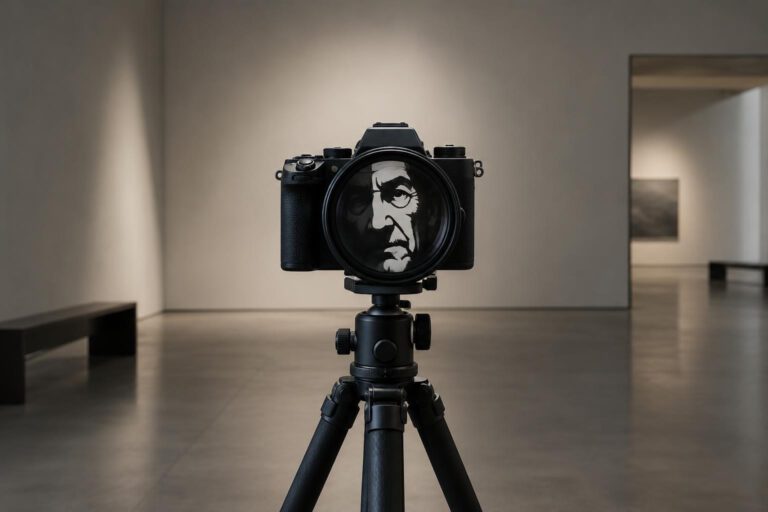
A crosshair is, at first, a matter-of-fact instruction: something is to be targeted precisely here. In radiotherapy, lines on the skin mark the spot used to align the radiation. Herlinde Koelbl takes these marks as the starting point for a photographic work concerned not only with treatment, but with people living with an illness.
“Fadenkreuze für das Leben” (Crosshairs for Life) opens at the Kunstmuseum Bonn on 8 November. The exhibition brings together portraits and interviews with 40 people diagnosed with cancer. That Koelbl developed the series from her own experience lends her perspective a biographical closeness: the photographer herself had cancer in 2019/20. Yet closeness alone does not answer the question of how much of a body and a personal story should be made public.
A sign with two meanings
The radiotherapy markings reminded Koelbl of her earlier project “Targets”, in which she photographed shooting targets and military crosshairs. The motif thus contains a contradiction: there it refers to aiming and killing; here to precise medical treatment intended to ensure survival. The exhibition places this shift in meaning at its centre, without the illness itself having to become the only story.
According to the Kunstmuseum, Koelbl spoke to people of different ages and backgrounds. Alongside the portraits are records of conversations exploring experiences of fear, loss, hope and changed perspectives on life. The format combines photography and testimony: the image shows a person, while the conversation allows them to speak about their own experience. How the texts are arranged in the space and how extensively they are presented has not been described in greater detail in advance.
Who determines the gaze?
This distinction is particularly important when it comes to images of illness. Visible traces can make an experience tangible; at the same time, the body risks becoming evidence of a diagnosis. The question of self-determination therefore arises not only in front of the camera, but also in selection, framing and publication: what do those portrayed wish to show? Which parts of their story do they disclose? And how can it remain clear that no one is confined to the role of “cancer patient”?
The information about the exhibition offers insight into Koelbl’s starting point and the subjects of the conversations, but does not explain in detail how the participants were involved in selecting and presenting the images. Viewers should not mistake this for presumed consent. Rather, it marks an open question raised by the interplay of portrait and interview: where does control over one’s own image lie when a personal experience becomes public?
Koelbl has long worked with photographic portraits and extended interviews. She became known, among other things, for the long-term study “Spuren der Macht” (Traces of Power), which documented changes in people holding political office over a period of years. In Bonn, the focus now turns to bodies, treatment and life stories. The exhibition is likely to be particularly interesting where the image is not intended to stand alone, but is accompanied by a voice.
“Fadenkreuze für das Leben” is on view at the Kunstmuseum Bonn from 8 November 2026 to 16 May 2027. The opening begins at 11.30am on 8 November. Between medical marking and photographic portrait, the series establishes a delicate tension: making illness visible without allowing the person to disappear within it.
Original reviewed by the editors · 6 November 2026