A second performance can hardly claim to be a second world premiere. That is its disadvantage in the business of publicity and its advantage for art: it can return without having to prove its novelty all over again. Perhaps a serious encounter with a work begins precisely when its news value starts to fade.
Across our articles this week on passing on dance, Henze’s chamber music and repurposing churches, a common question emerges for me: what future do we give to what has already begun? My argument is this: anyone who wants renewal must make repetition possible. Not as a reward for the tried and tested, but as a chance for something to come into its own at all.
Returning is an opportunity to change
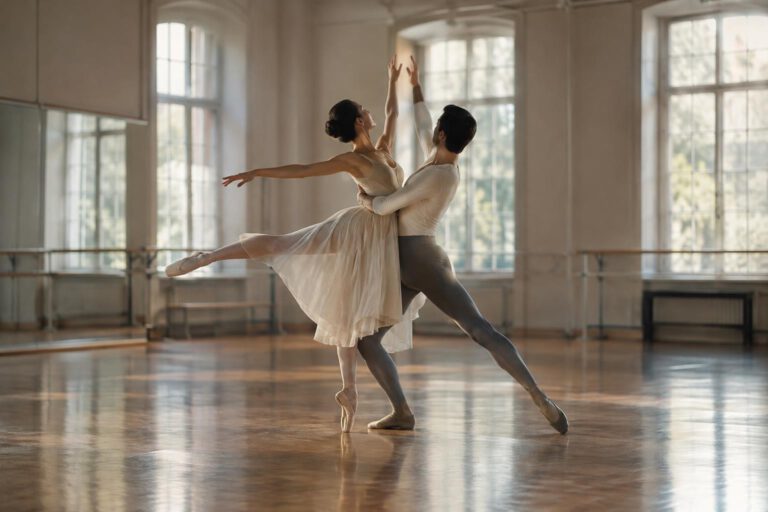
“How a Ballet Is Passed On” uses John Cranko’s “Romeo and Juliet” to explore how a choreography lives on. The work has been part of the Stuttgart repertoire since 1962. Yet the date alone does not explain what passing it on means. A ballet cannot be preserved simply by reliably printing its title. Other bodies must make it their own. Fidelity to the work and change are not clear-cut opposites here: without new performers, there would eventually be nothing left to be faithful to.
That is also an argument for the as yet unfamiliar. Our article “Henze on a Small Scale: From Anniversary to Repertoire” distinguishes between an occasion for commemoration and a lasting presence in musical life. The Morgenstern Trio is scheduled to perform at the Musiktheater im Revier on 14 November. That creates an opportunity, not yet a habit. A centenary is, after all, not a particularly flexible programming tool.
So alongside the question of what is being heard for the first time, I would like to see a second: what gets another opportunity? Not every work reveals itself immediately. Not every first performance exhausts its possibilities. Our judgement, too, should have the right to develop. Those who demand only the new may deny precisely that new work the time it needs.
No protection for complacency
The strongest objection is obvious: repetition can seal programmes shut. Those who already have a place keep it; others wait outside the door. Maintaining the repertoire would then be a kindly name for administering privilege. Nor can anyone demand that every failed experiment be continued indefinitely. Money, rehearsal time and attention cannot be increased at will.
That is why I am arguing not for protection of the status quo, but for well-founded second chances. A revival should have to arouse just as much curiosity as a premiere. What could be cast differently, worked through more precisely, heard afresh? And which previously overlooked work deserves the perseverance so readily granted to the familiar? What matters would not be a work’s age, but whether another encounter opens something up.
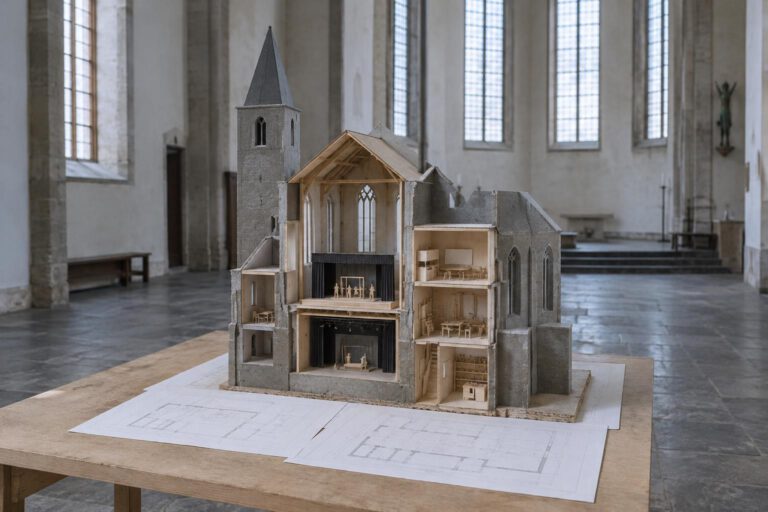
In the designs for five churches in the Ruhr region, this idea finds a spatial counterpart. Our article on the Christ-König-Kirche in Bochum asks not only about a new use, but also who will take responsibility for conversion and operation. A convincing design and a place that remains usable over time are two different achievements. The second is no less creative simply because it also needs staff rotas.
Ultimately, this concerns us as a magazine too. If we call for renewed encounters, we must not tie our own attention exclusively to the calendar of beginnings. The interesting question after a premiere is not always: what comes next? Sometimes it is: what else might this become? To give the new a second chance would not mean abandoning the spirit of a fresh start. It would be an attempt to take it seriously.
Original reviewed by the editors · 3 November 2026