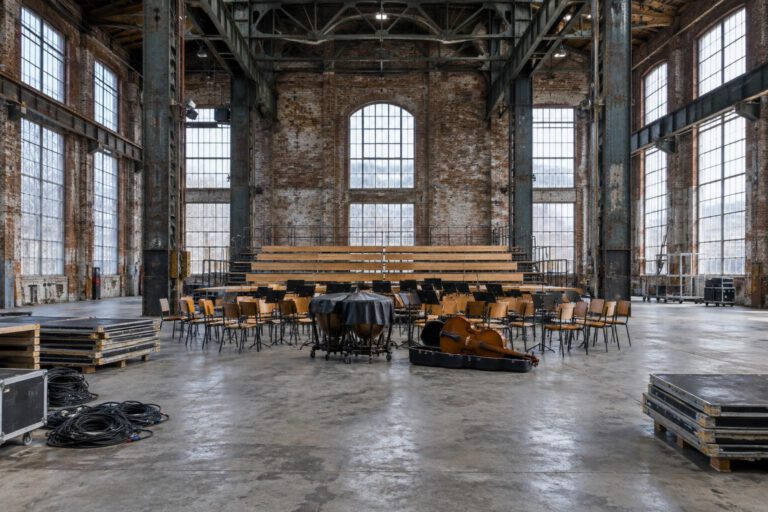
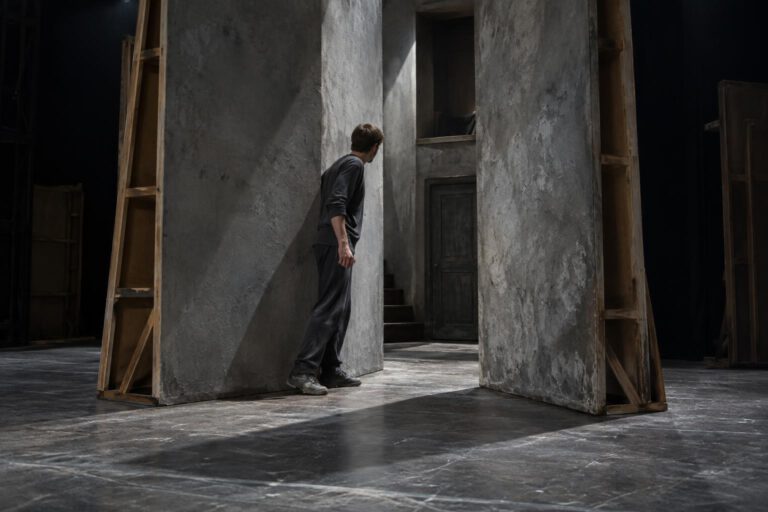
On 24 October, a spectre older than the Federal Republic appeared on stage at the Deutsche Oper Berlin: Richard Wagner’s ‘The Flying Dutchman’, the restless seafarer to whom a woman promises redemption. Milo Rau treats the Romantic opera not as an escape from the present, but as a lens through which to examine it. The production connects Wagner’s antisemitism and idea of redemption with German post-war history and German-Israeli relations. A classic thus becomes a touchstone for the question of what kind of public a major opera house wants to address today.
This is also a question about Aviel Cahn’s programming. He took over as artistic director with the 2026/27 season; according to the house, the motto ‘Make Love…’ is intended to bring together tradition and the present, community and artistic exploration. In Rau’s hands, this ambition becomes tangible and risky: not only is the opera presented, but the historical burden of its music and the political images it evokes also become subjects of scrutiny.
A classic becomes a site of remembrance
Wagner’s opera, first performed in 1843, tells of a cursed seafarer who can be redeemed only through Senta’s fidelity. Rau supplements the score with a prologue and an additional text before the third act, developed together with Sarah von Schwarze and Shlomi Moto Wagner. The Deutsche Oper describes the evening as a cinematically narrated journey through German cultural history after 1945. The rbb reports connections with the Munich Olympics attack and settings in Germany, Israel and the occupied territories. These are not neutral backdrops: they shift the question of redemption from the distant realm of myth into a present in which the politics of remembrance and the Middle East conflict collide.
Therein lies the challenge — and the risk. Wagner’s antisemitism is not merely a biographical footnote beside a significant score. It is part of the history of the composer’s reception and forces every house that stages his work to engage with it. Rau uses the opera as a space for thought, without promising an easy reconciliation. At the same time, the rbb report describes the production as a pointed confrontation that is at times heavy-handed. Conflict is thus not only the evening’s subject, but also a question put to its audience: who is entitled to speak about guilt, and when does remembrance become self-exoneration?
Between repertoire and a new public
Cahn’s season places this political approach within a broader framework. The house retains the established operatic repertoire while also championing contemporary works intended to reach new audiences. In an interview with the Deutsche Oper, Cahn emphasises the importance of the second venue, Tischlerei, and an experimental accompanying programme; the new Unlimited strand is intended to enable further formats and encounters. This is more than an aesthetic decision: a publicly funded opera house must explain whom it serves and how it uses its resources beyond the performance itself.
‘The Flying Dutchman’ offers one answer, but not the whole answer. Post-performance discussions have been announced for performances following the premiere, with guests from culture, politics and public life — including Berliner Ensemble artistic director Oliver Reese, Neukölln integration commissioner Güner Balcı and former German ambassador to Israel Steffen Seibert. These different perspectives can turn the evening into a conversation. Whether this will lead to a genuine exchange with a diverse audience cannot be determined from the programme alone.
An invitation is not yet participation
Here lies the crucial dividing line: a stage can make conflicts visible and invite people to voice disagreement. But a controversial subject alone cannot create a public sphere. That requires ways in that reach beyond those already interested in opera, and formats in which it is not only the institution and its prominent guests who speak. The post-performance discussions are a start; whether they genuinely incorporate different experiences will become clear only in practice.
Cahn inherits a house with an extensive Wagner repertoire and a history in which tradition and artistic renewal coexist. Rau does not turn this into a simple choice between preservation and updating. Rather, his production asks whether a classic becomes publicly relevant precisely when it is not treated as an inviolable legacy. The Deutsche Oper’s answer is provisional: it is putting its faith in friction, conversation and the hope that opera can be more than an evening in the auditorium. Whether the public accepts this invitation remains an open question.
Original reviewed by the editors · 26 October 2026