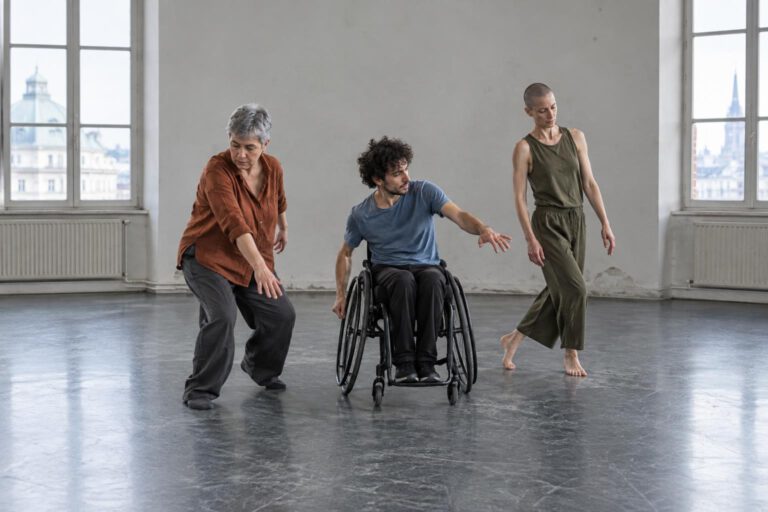
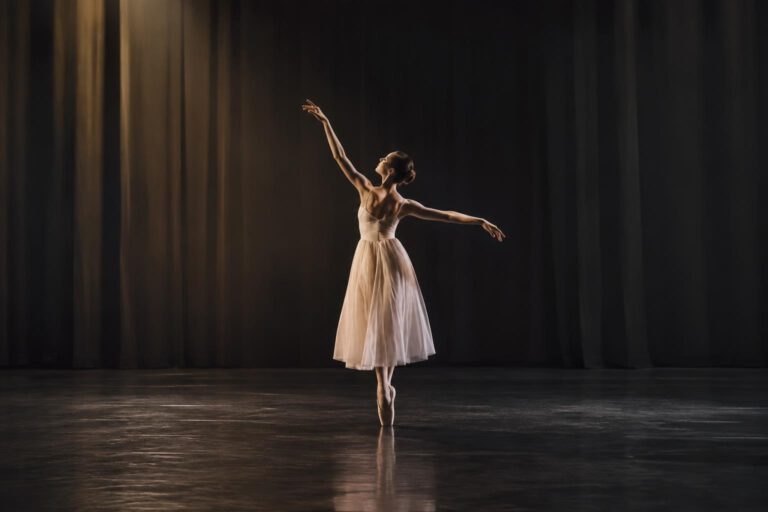
On 31 October 2026, “Different Grounds” premieres at the Semperoper: a triple bill of ballet, three world premieres, three choreographic voices. Stephanie Lake, Julian Nicosia and Shahar Binyamini are creating works for Semperoper Ballett. The question behind the programme extends beyond opening night: how does a classically trained company become an institution that stands for more than preserving familiar works and names?
The answer does not lie in a single style. It emerges from decisions about who choreographs, how dancers participate in the creative process and which movement languages meet within an institution. “Different Grounds” makes this curatorial question the guiding principle of the evening.
Three works, no uniform style
The three parts draw on different musical reference points. In “Quanta”, Lake choreographs to music by Robin Fox; Nicosia’s “A Quiet Collision” uses a composition by Michael Anklin and Janiv Oron. Binyamini’s “Body Suites” is set to music by Johann Sebastian Bach. For all three works, the Semperoper also credits the choreographers with responsibility for the costumes; each collaborates with Fabio Antoci on the lighting design.
The programme thus makes no promise to distil a unified aesthetic from three approaches. It places them side by side. The combination of electronic music and Bach alone signals different starting points, though this is not in itself a reliable indication of the impact the choreographies will have. Only seeing a performance can reveal how these differences take concrete shape on stage.
The company as collaborator
A new choreography is not a finished image simply transferred onto bodies. It develops through working with the dancers: in rehearsals, through exploring movements and through considering the possibilities each group brings. The Semperoper describes the three choreographers as artists who also develop their movement language through collaboration with dancers. At the same time, the institution points to the company’s classical training: ballet elements such as the five positions of the feet or pointe shoes can feed into contemporary works.
This is a space of productive tension, not an automatic synthesis. Classical technique provides precision, lines and a shared physical vocabulary; contemporary choreography can take up that vocabulary, shift it or confront it with different demands. A company’s identity is therefore not expressed by every movement looking the same. It also develops through the versatility with which the dancers respond to different choreographic methods.
Identity is a question of programming
Since the 2024/25 season, Semperoper Ballett has been led by Kinsun Chan, a choreographer able to shape the institution’s identity through his own works and guest choreographies. “Different Grounds” occupies a special place in this season: three world premieres sit alongside repertoire titles such as John Cranko’s “Onegin” and “The Nutcracker”. Chan’s own “Cinderella” will also follow in the 2026/27 season.
This juxtaposition is not a break with tradition, but an opportunity to question it anew. A repertoire keeps inherited forms alive; new works test what a company can make of them today with its technique and experience. Nor does a contemporary production define an identity simply by being new. What matters is whether an institution repeatedly makes such encounters possible, building a recognisable practice in the process.
The title “Different Grounds” can be read as a statement of intent and an invitation: different choreographic starting points meet the same ensemble. Whether a distinctive Dresden voice emerges will not be decided on opening night. It will become apparent over time – through the artists who return, the dancers who expand their possibilities, and a programme that does not merely announce diversity but gives it space.
Original reviewed by the editors · 3 November 2026