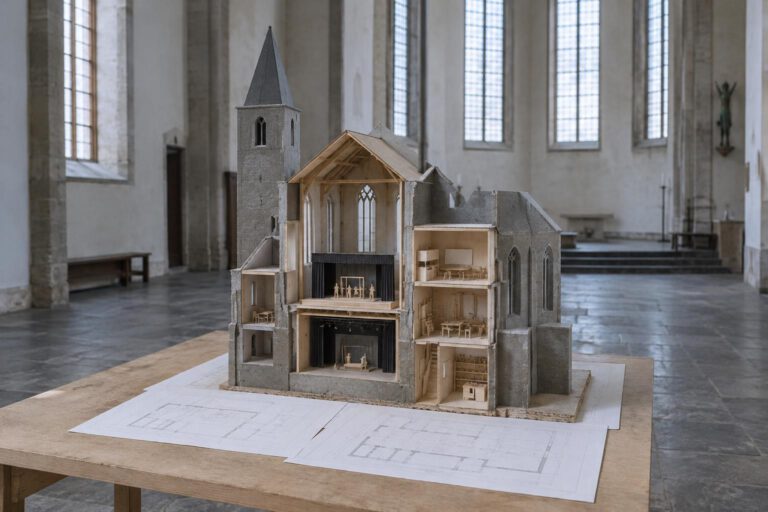
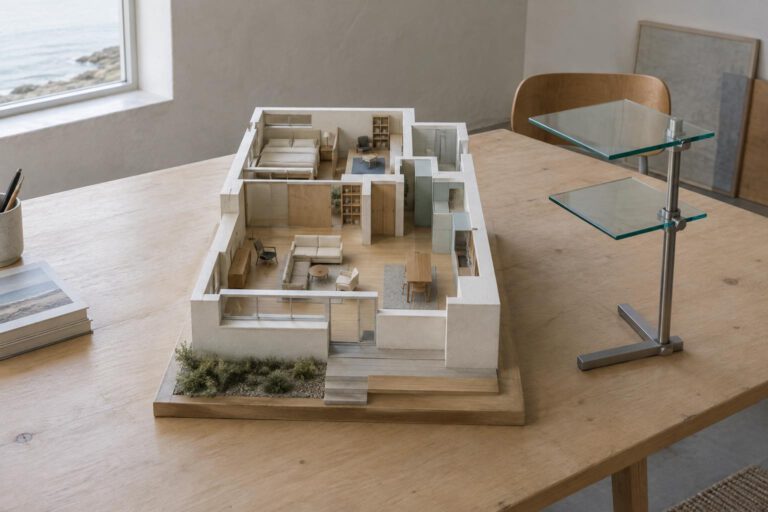
“Longevity is more than durability”: this is the premise of “BUILT TO LAST” at machwerkhaus köln. From 26 to 31 October 2026, the exhibition brings together approaches from design, architecture, material development and industry in Halle 95n. Across some 550 to 600 square metres – figures vary between event listings – it will explore products, materials and projects in which repair and reuse are not merely afterthoughts.
This is a worthwhile subject, but also an ambition that cannot be judged by an attractive surface alone. A piece of furniture may be robustly built yet still difficult to repair: if joints are glued rather than detachable, upholstery cannot be replaced, or spare parts soon become unavailable. Conversely, one replaceable component does not make a product circular. What matters is whether its construction, servicing and continued use work together.
From promises to verifiable practice
The organising team divides the exhibition into the themes LASTING, BEAUTY, FUNCTION and BUILDING. Products, prototypes, materials and research projects have been announced, with daily tours and discussions complementing the displays. Named exhibitors include TECTA, Nils Holger Moormann, Wilkhahn, Gira, TRILUX, ZINQ and Düsseldorf University of Applied Sciences. Tobias Groß of Studio für Gestaltung is responsible for the curation and exhibition design.
This description sets out a framework, but does not yet provide independent evidence of the lifespan or repairability of individual exhibits. Manufacturers’ claims about quality, materials or circularity are, in the first instance, statements by the suppliers. A robust assessment would require practical questions: How can a product be dismantled without damaging it? Which components are considered subject to wear? Are spare parts available, on what terms and for how long? Are there instructions, a repair service, take-back schemes or a verifiable route to a second use?
A framework of criteria already exists. DIN SPEC 68008 describes characteristics that can be used to examine the circularity of furniture across different phases of its life. The European standard EN 17902, meanwhile, addresses the assessment of disassembly and reassembly. It explicitly does not constitute an overall judgement on a piece of furniture’s circularity: taking it apart and putting it back together is only one part of the question. Care, repair, service life and whether it is actually passed on must also be considered.
What remains when the first use ends?
Particularly in interiors, looking only at individual pieces of furniture is not enough. Uses change; workplaces, shops and homes are remodelled, repurposed or vacated. A concept designed for longevity must therefore also address whether components can be adapted to new requirements and whether materials can be recovered in separate, unmixed streams. The exhibition addresses this broader perspective by considering product design, architecture and material questions together.
The Cologne event is part of the fifth machwerkschau and takes place alongside other design events. The venue, machwerkhaus in Köln-Kalk, is an industrial site with workshops, studios and exhibition spaces. This fits the ambition to bring design together with production and craft. Yet the setting alone is not enough to assess the individual contributions: that requires insight into construction and conditions of use – and voices that do not speak solely for the exhibition or the brand concerned.
Such an independent assessment cannot be made on the basis of the publicly available information. It therefore remains unclear here which of the products on display actually offer spare parts over the long term, how repairs are organised, and whether take-back or reuse systems already work in practice. This distinction matters: “designed for longevity” describes an aim, not automatically a documented life cycle.
The exhibition’s closing date is also inconsistent across the online information: the header of the BauNetz listing gives 30 October, while the organiser’s website and the machwerkhaus köln programme state that it runs up to and including 31 October. This report therefore uses 31 October; the discrepancy should be clarified directly before publication. In any case, the exhibition’s central question remains relevant beyond its final opening day: whether an object is genuinely used for a long time depends not only on how long it lasts, but also on whether it can be repaired, adapted and passed on.
Original reviewed by the editors · 28 October 2026